Seriously though, does anyone not buy ready prepared cat food? Do you feed your cats fresh meat and fish? If you do, do you cook it first? Do you feel it's better for them? We would love to hear your views.
Monday, 14 November 2022
A Purrfect Diet For Your Cat
Seriously though, does anyone not buy ready prepared cat food? Do you feed your cats fresh meat and fish? If you do, do you cook it first? Do you feel it's better for them? We would love to hear your views.
Monday, 5 September 2022
Why Is Your Cat Yawning?
But, beware, this may be his cue to start galloping around the house like a demented harpy because cats sometimes yawn to get a quick shot of oxygen into their lungs to stave off sleep and get a bit more energy. He may not be ready for his nap yet.
Or he may be trying to talk to you. He could be telling you that he’s bored and please get out that toy mouse on a string.
But if your cat yawns excessively there may be more to it than plain tiredness. He may have a sore mouth, like a cut from chewing sticks once too often or his teeth may need attention. If he is also grinding his teeth or drooling, it’s time to take him to a veterinarian.
Thursday, 28 July 2022
Cats And Babies
All cats are different when it comes to handling - some are happy to be touched all over, whereas others may only enjoy being stroked on their head or shoulders. It’s common for most cats to be sensitive around their stomach area and tail. If your cat doesn’t like being touched in certain areas, you will have to be mindful of this when your baby becomes more mobile, as babies can “grab” in their enthusiasm to want to touch and stroke, which can easily upset your cat.
Avoid playing games that involve your hands, however tempting! Even if your cat is gentle when playing, it’s always best to use toys instead, as you don’t want your cat to favour fingers or hands, especially when your baby arrives.
Sounds
To prepare your cat for the sounds that babies make, play recordings of a baby crying, gurgling and screaming for short periods during the day. Initially the sound should be barely audible, increasing the volume gradually as your cat grows accustomed to the noises.
New smells and objects
A cat’s primary sense is smell, so new products and objects bought into the house can be a particularly challenging. Get your cat used to the smell of baby powder, soaps, shampoos and baby milk by using them in the months leading up to your baby’s arrival. Put some of the products on your own skin (eg powder, baby lotion) – this way the new smells can mingle with a familiar “safe” smell.
To make the new objects smell more familiar (and therefore less threatening) wipe a soft cloth over your cat’s head and then using the same area of the cloth, wipe the new baby items.
Food
When your baby begins to toddle and explore, cat food may prove an irresistible attraction so accustom your cat to eating in an area, preferably off the ground, where your child won’t be able to reach.
A Quiet Place
You are likely to have lots of visitors when your new baby arrives. Some sociable cats may enjoy the extra attention but others may become overwhelmed. Cats should always have a quiet, safe place to go to whenever they need to rest or retreat from the visitors or the baby.
Health matters
Make sure that your cat is in good physical health. Your cat should also be free from fleas and worms. Any suspicions about illness or developing ailments should be checked out by a qualified vet. Any pain or irritation that a cat is feeling will lower their tolerance to the changes that are about to happen, which may lead to spraying or aggression.
How will your pet react?
If this is the first time your pet will be living with a new baby, ask yourself the following questions.
If you are happy with your cat’s behaviour, then you can proceed with the general advice.
After the baby is born
First introductions:
The baby should be introduced in a quiet room where the cat has few associations – not a place where the cat usually sleeps or eats. Hold the baby in your arms and allow your cat to sniff them. Reward your cat’s calm behaviour with gentle praise and tasty titbits. The cat will appear interested for a few seconds and will then lose interest.
Hygiene
Due to hygiene concerns, people who do not have pets of their own may try and encourage you to rehome your cat. It’s essential that your cat is treated for worms and fleas regularly.
Supervision
Never leave your cat unsupervised with a baby.
Tuesday, 12 July 2022
What's In A Cat Name? Ask Sheldon Sir Bottom Wimple!
Monday, 27 June 2022
How To Tell If Your Cat Is Cross With You
Some cats are grumpier than others but even the most laid back kitty occasionally has a grouchy moment.
So if you want to avoid the sideswipe or the horrible hiss learn how to tell if your cat is mad at you.
1. They Give You The Cold Shoulder
If your cat's mad, they might leave the area you're in, avoid getting near you, and simply watch your movements from afar. Cats just like to have some space if there's something bothering them or stressing them out, or if their routine gets messed up.
2. They Swish That Tail
A cat's tail will show you how they're feeling, and if your cat is mad, it's going to show. "A tail that’s flickering back and forth quickly or held low can indicate an irritated cat," explained iHeartCats. "The hair may also stand up on an angry cat’s tail." Look out for a tail that's lowered instead of standing up tall, and swishing back and forth, as this shows kitty is annoyed — and if their tail starts thumping, their mood has probably escalated from annoyed to angry, and they could become aggressive. This is usually a clear indication that kitty isn't happy with you or the current sitch, so steer clear.
3. They Signal With Their Ears
Cats use their ears to express emotions. If your kitties' ears lower down or flatten out against their head, it could mean they're in a mood. A bad one. Steer clear of heavy pets until they've perked up again.
4. They Exhibit Fur-ious Fur
The fur all over their body seems to stand up straight, totally puffed up, and they may even arch their back to appear even larger. Fluffy and adorable as they may look, this is a clear indication that they're angry or in fight mode. Conversely, they may instead try to make themselves look smaller by crouching their body low to the ground and hunching their shoulders. If you notice either of these body movements, it's good to make sure there are no other factors around that could be triggering this response, such as another animal outside the window or another animal in the household who may be antagonizing them.
5. They Growl And Hiss
If your cat is growling or hissing at you, they're probably unhappy with you or what you're doing. A low growling sound (or a deep, guttural vocalization that is different than a meow) is usually a clear indication that your kitty is cross with you or the situation. Same goes with hissing: It's basically a cat's way of saying "lay off," so listen to them. Once a cat starts making these vocalizations, stop whatever you're doing — petting, playing, etc. — and give the cat some space.
6. The Paw Swipe
Almost every cat person has experienced a paw swipe while petting their beloved kitty. Whether it's a gentle bat of the paw or a claws-out, blood-drawing scratch depends on the cat and how angry they are, but in either case, it could indicate that your kitty wants you to step off and give them some space.
7. They Give You The Evil Eye
Cat faces can be expressive too. Does your cat ever just give a look and you know what it means? Sometimes you can tell your kitty is angry with you because they're watching you and giving you that subtle but identifiable angry eye. Another indication that they could be angry is that their pupils dilate — although this could happen for a wide variety of reasons, so look for other factors in conjunction with that before you assume your cat's mad at you based on pupil size alone.
Wednesday, 8 June 2022
Hospital Visitor Henry
Friday, 3 June 2022
Call Me Cuddle Cat!


Monday, 2 May 2022
"Dinosaur" Cat Looking For A Home

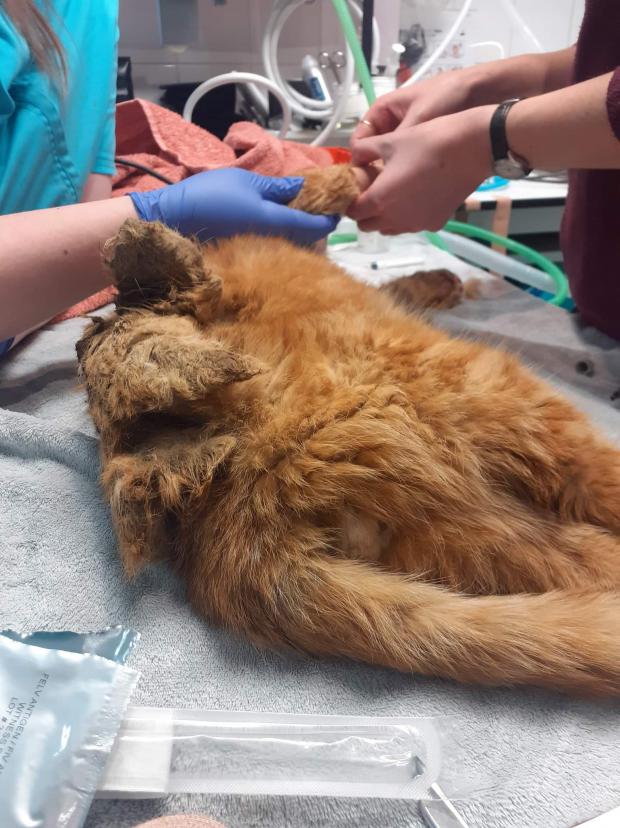
Sweet cat Brian, dubbed the dinosaur cat, is looking for a home now he has been spruced up and treated by the Blue Cross rehoming centre in Oxfordshire in the UK.
Brian, who is around 14 years old, was found wandering the streets alone with huge, matted clumps of fur along his back which reminded one of the helpers of a stegosaurus!
Elisha Webber, Animal Welfare Assistant at Blue Cross said: “Poor Brian was in such a sorry state when he arrived with us. He was severely matted along his spine, dehydrated and was covered in fleas and ticks. He also needed extensive dental work and some teeth removed.
“We’re not sure how long he had been alone and wandering the streets but he’s a very sweet-natured boy with so much love to give. He enjoys his food and loves to curl up in a nice warm spot.
“His new owner will need to be patient with him as they’ll need to build up his trust but he’ll make a wonderful companion. He really does deserve a happy ending.”